Nature's Hidden Highways

Pardeep Singh
| 10-06-2026
 · Plant Team
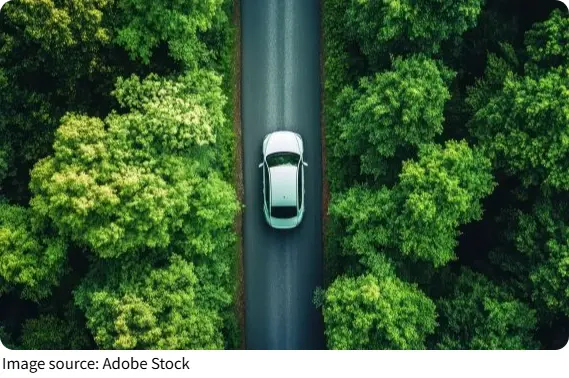
A highway cuts through a dense forest. On one side, deer graze quietly. On the other, a family of foxes hunts at dusk.
Between them? Six lanes of speeding traffic. This is what habitat fragmentation looks like up close — and it's happening across every continent.
When Nature Gets Cut Into Pieces
Roads, cities, farms, shopping centers — all of it slices through land that animals once roamed freely. What used to be a single, connected ecosystem gets chopped into smaller and smaller patches. Animals get trapped. They can't reach food. Can't find mates. Can't escape droughts or fires when they hit.
Research shows that 70% of the remaining forest sits within 1 km of the forest's edge, where human pressure and invasive species chip away at what's left. Fragmented landscapes have 13.6% fewer species at the patch scale compared to connected ones. That's not a small number. That adds up fast across entire regions.
Can you really trust what your plant label says?
Why having more plants isn't just pretty, it's the planet's insurance policy
Urban greening doesn't just cool parks, it creates a cooling ripple effect that travels downwind for kilometers.
Desert Plants Are Nature's Survivors: The Three Superpowers That Help Them Thrive
Master seeds, cuttings, and division to grow your plant collection like a pro without spending a dime.
Grow fresh mint, basil, rosemary, and many other herbs at home with these simple tips.
What a Wildlife Corridor Actually Is
Simple idea, really. Wildlife corridors are strips of natural habitat that connect larger areas of wilderness — linking forests, wetlands, and grasslands that human development has separated. They show up in different shapes: vegetated overpasses above highways, tunnels beneath busy roads, riverside greenways threading through urban zones, even hedgerow networks across farmland.
These structures range from narrow paths 50 feet wide to broader belts supporting diverse species during travel. In cities, something as simple as a fence gap or small tunnel can guide hedgehogs and amphibians safely across dangerous ground. Wider is generally better — more room means fewer edge effects and less exposure to threats from neighboring land use.
Why Genetic Flow Matters More Than You'd Think
Here's something that doesn't get talked about enough. When a population gets cut off, animals start breeding with close relatives. Generation after generation, harmful traits build up. Disease resistance drops. Reproduction slows. The group quietly shrinks toward extinction.
Wildlife corridors serve as genetic lifelines between separated populations. Even modest increases in corridor width decrease genetic differentiation between patches, increasing diversity and effective population size. Animals can travel to find unrelated mates. Healthier offspring. Stronger populations. It sounds almost too straightforward — but it works.
More Than Just Animals Moving Through
Corridors don't just help the creatures walking through them. Plants benefit too. Birds, mammals, and insects carry seeds to new locations as they travel. Pollinators hop between connected patches, keeping native vegetation alive. Predator-prey relationships stay balanced when species can move freely.
In connected habitats, extinction rates were lower by 2% and colonization rates were higher by 5% over 18 years. Movement between connected habitats was significantly greater than between unconnected ones — covering small mammals, butterflies, plants, and pollinators alike. Every link in that chain matters.
Real Places, Real Results
Take the Yellowstone to Yukon Conservation Initiative — a connected corridor stretching 3,400 kilometers. Over 25 years, this project has seen an 80% rise in protected areas and has established over 100 wildlife road crossings for safe passage. Meanwhile, Bhutan has built ecological corridors covering nearly 9% of its total land area, letting tigers and leopards roam across their natural ranges without hitting a fence.
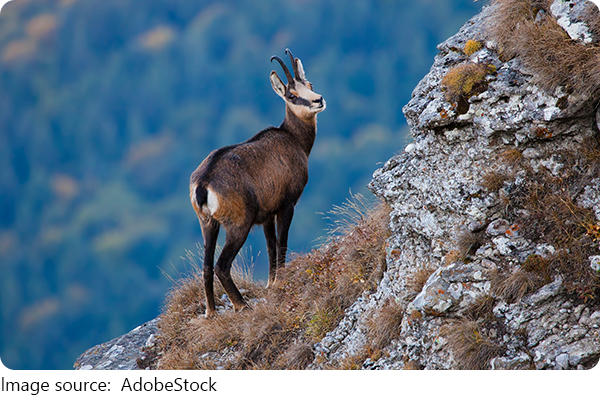
As climate change pushes species toward cooler ground, these corridors become escape routes. Around 20% of global protected land will undergo climate zone shifts by mid-century. Without connected pathways, animals have nowhere to go when temperatures shift.
Building corridors isn't flashy. It doesn't make headlines the way a new wildlife sanctuary might. But quietly, steadily, these green threads are stitching broken landscapes back together — one crossing at a time.