AI Driving Safer Roads

Nolan O'Connor
| 27-01-2026
 · Auto Team
Ever noticed how modern cars seem to anticipate danger before you even react? That's artificial intelligence at work, quietly making roads safer.
AI systems aren't just a futuristic concept—they're already integrated into many vehicles, enhancing safety, reducing accidents, and even assisting in emergency situations.
AI-Powered Driver Assistance
Adaptive cruise control adjusts speed automatically based on traffic flow, helping prevent collisions in busy conditions.
Lane-keeping systems detect unintentional lane departures and gently guide the car back, reducing the risk of side collisions.
Blind-spot monitoring alerts drivers when a vehicle is approaching from behind, a feature that's saved countless lives.
How to stay protected on your commute without feeling heavy or overheated!
How to match your riding gear to every season for safer, comfier rides!
How the right helmet can protect you and boost confidence on the road!
Why vintage motorcycles are making a comeback among today’s riders!
Master the First and Last 3 Seconds of Every Ride!
Why Smooth Timing Beats Speed on Every City Ride!
These systems act as a second pair of eyes, supplementing human judgment and reducing the chances of accidents caused by inattention.
Predictive Safety Features
AI doesn't just react; it predicts potential hazards.
Emergency braking systems can detect imminent collisions and automatically apply brakes, even if the driver hesitates.
Pedestrian detection uses cameras and sensors to identify people crossing the street, alerting drivers or stopping the vehicle in time.
Traffic sign recognition informs drivers of speed limits, stop signs, and other critical road information, enhancing situational awareness.
By anticipating danger, AI helps drivers make safer decisions in real time.
Data-Driven Learning
AI systems improve over time by learning from data.
Vehicles equipped with AI collect information on driving patterns, traffic conditions, and accident-prone areas.
This data allows manufacturers to refine algorithms, improving accuracy in predicting hazards.
Over time, cars become smarter, understanding both the environment and the driver's behavior to minimize risks.
The more data these systems process, the more they enhance safety, creating a cycle of continuous improvement.
Autonomous and Semi-Autonomous Driving
AI is the backbone of self-driving and semi-autonomous vehicles.
Semi-autonomous cars handle highway driving, maintaining lanes and speed while allowing drivers to focus on other tasks safely.
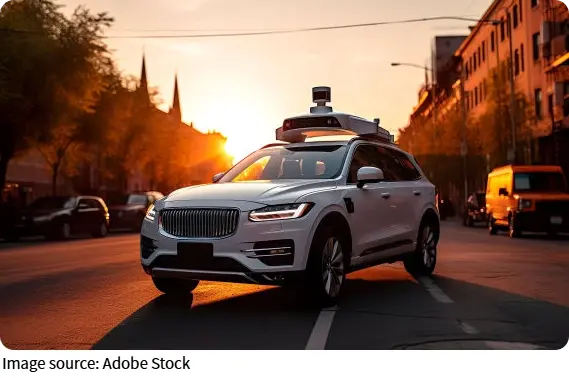
Fully autonomous vehicles use AI to process surroundings, navigate complex roads, and make split-second decisions, reducing human error.
AI coordination between vehicles, or “connected car” technology, can prevent collisions by sharing real-time traffic information.
These innovations point to a future where accidents caused by human error could drop significantly.
Challenges and Considerations
AI in cars isn't without challenges.
System reliability is crucial—software errors or sensor malfunctions can compromise safety.
Ethical decisions, such as how an AI should react in unavoidable accident scenarios, remain a topic of discussion.
Privacy concerns arise from vehicles constantly collecting and transmitting data.
Accessibility and affordability are also key issues, as not all drivers can access advanced AI-enabled vehicles immediately. Ensuring widespread adoption while maintaining safety and ethical standards is a delicate balance.
Despite these challenges, industry standards and continuous testing help ensure AI systems remain dependable and effective.
The Human-AI Partnership
Ultimately, AI doesn't replace drivers; it enhances them.
Humans still make the final judgment, but AI offers real-time guidance to prevent mistakes.
The combination of human intuition and AI's precision creates safer driving conditions.
Educating drivers on AI features ensures that these systems are used correctly and effectively.
AI integration transforms the driving experience, making vehicles smarter, safer, and more reliable. With every update and every data-driven improvement, roads become a little safer, and drivers gain an invaluable co-pilot who's always alert, always learning, and always ready to intervene.
By embracing AI, we're not just improving car safety—we're shaping a future where daily commutes, long drives, and even emergency responses can be handled more efficiently and securely. The collaboration between humans and AI promises a new era of smarter mobility that benefits everyone on the road.